Care
Keeping the finish: tarnish, plating wear, and the polish that makes it worse
On this page
- Two different problems, one drawer
- Tarnish is a chemical film
- Polishing removes metal, and that is the catch
- What actually wears plating away
- The routine, in five lines
- Water, chlorine and the shower question
- Storage that does the work for you
- Herringbone, snake and the kink that does not come out
- The clasp fails before the chain does
- How long any of this lasts
Silver goes dark and plating goes thin. They look like the same problem in a drawer and they are opposites: one is a film you can take off, and the other is metal that is gone.
Two different problems, one drawer
Solid sterling silver tarnishes. The surface reacts with sulphur in the air, goes yellow then brown then black, and the metal underneath is untouched. Clean it and the shine comes back.
A plated piece does not tarnish in the same way, because the gold on top does not react. It wears. The layer thins where the piece rubs, and when it is gone the base metal shows and cannot be brought back. Knowing which of the two you own decides everything below, and it is printed on every product page.
Tarnish is a chemical film
Conservators who look after silver in museums describe the mechanism plainly.
“A thin layer of dark tarnish can quickly destroy the surface lustre of silver. This layer consists mainly of black silver sulphide, and is caused by sulphurcontaining compounds such as hydrogen sulphide in the air”
Hydrogen sulphide comes from ordinary things: wool, rubber bands, some paints, eggs, and city air. That is why a silver chain left out on a shelf dulls faster than one kept in a closed box, and why the tarnish comes back after cleaning if the storage does not change.
Polishing removes metal, and that is the catch
The same note warns that every polishing or chemical tarnish removal takes away part of the surface. On a solid sterling chain that is a slow and acceptable trade over years.
On a plated piece it is a disaster in one sitting. A polishing cloth, a dip, or the aluminium-foil-and-baking-soda trick from the internet will take the gold off along with the film, and there is no way back. If a piece is plated, clean it with a dry cloth and nothing else.
| What the page says | Pieces | What it means underneath |
|---|---|---|
| 925 sterling silver | 129 | Silver all the way through, 925 parts per thousand. Tarnishes, polishes back. |
| 14K gold plated over 925 sterling silver | 54 | A gold layer over solid silver, in a cooler tone than 18K. |
| 18K gold plated over 925 sterling silver | 27 | A gold layer over solid silver. When it thins, silver shows. |
| Stainless steel | 27 | Steel with no plating. Takes water and knocks, does not tarnish. |
| Not stated | 26 | The maker does not state what sits under the plating. |
| 14K gold plated, base not stated | 22 | The maker does not state what sits under the plating. |
| Rose gold plated over 925 sterling silver | 19 | A copper-warm gold layer over solid silver. |
| 18K gold plated over stainless steel | 15 | A gold layer over steel: hardest wearing, greyer where it goes. |
- Solid sterling silver: a proper silver cloth, occasionally, then store it sealed
- Plated over silver or steel: a dry soft cloth only, no polish, no dip, no ultrasonic
- Any piece with stones: no dip, and no soaking
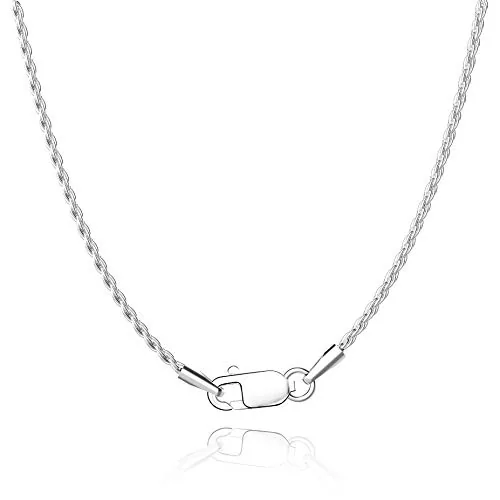
1.35mm Sterling Silver Rope Chain 18 in
Solid sterling: this is the kind you may polish, gently and rarely
$18.994.4 out of 5

What actually wears plating away
Friction and chemistry, in that order. The places plating goes first are the places the piece rubs: the back of a chain against a collar, the inside of a hoop against the lobe, the underside of a clasp.
Chemistry does the rest. Perfume, hairspray, sunscreen and sweat all sit on the surface, and several are mildly acidic. None of this is exotic damage, and the fix is a habit rather than a product. Jewellery goes on last, after the perfume and the hair, and comes off first.
The routine, in five lines
- Put it on last, after perfume, lotion and hair products
- Take it off before showering, swimming and the gym
- Wipe it with a dry soft cloth when you take it off, not with water
- Store it dry, closed and separate, not tangled with other chains
- Polish only what is solid, and only when it needs it
That is the whole routine. The Jewlpire workshop sells no cream, spray or dip because none of them would earn their place beside those five lines.
Water, chlorine and the shower question
Plain water does not hurt gold or silver. What hurts is what is in the water and what is left behind: chlorine attacks the copper in sterling alloys, salt water accelerates everything, and soap dries in the links where a cloth cannot reach.
So the honest answer to the shower question is not that water is forbidden. It is that a chain worn in the shower every day for a year will look older than the same chain taken off, and the difference is mostly soap film rather than damage.
Storage that does the work for you
Sealed and dry beats every cleaning routine, because it stops the reaction rather than reversing it. A small zip bag with the air pressed out costs nothing and keeps silver bright for months.
Keep chains apart from each other. Two chains in one pouch will knot, and untangling a fine chain is how fine chains get stretched links and weak spots.
The flat chains, which need the most care
Herringbone and snake links lie beautifully and kink permanently. Store these flat or hanging.



3mm 18K Gold over Steel Herringbone Necklace 16 in
- 16″
- 22″
- 24″
3mm · 16 in · 18K gold plated over stainless steel
$14.994.4 out of 5
4mm 18K Gold over Steel Herringbone Necklace 16 in
- 16″
- 20″
4mm · 16 in · 18K gold plated over stainless steel
$15.994.4 out of 5
Herringbone, snake and the kink that does not come out
Flat chains are made of plates rather than loops, and plates do not forgive a sharp fold. A herringbone chain that has been balled into a pocket comes out with a crease across it, and the crease is a permanent weak line.
There is no repair worth the money at this price. Prevention is the entire strategy: hang it, or lay it flat, and never store it under other jewellery.
The clasp fails before the chain does
Chains rarely break in the middle. They open at the clasp, or the jump ring beside it spreads, and both are foreseeable.
A lobster clasp closes under spring pressure against a solid hook and survives more than a spring ring at the same price. Every product page here names the clasp type for that reason. Once a month, with the chain off, pull firmly at the clasp end: five seconds of testing gives a week of warning.
How long any of this lasts
Honestly, it depends on wear more than on care. A plated chain worn daily against a collar will show its base at the rub points within a year or two. The same chain worn on evenings out will look new for far longer.
Solid sterling has no such clock. It will darken, and it will come back every time you clean it, which is the argument for buying silver rather than plating when the piece is one you intend to wear every day.
Sources, read at the page
- Silver: Care and Tarnish Removal (CCI Notes 9/7), Canadian Conservation Institute. Read 2 September 2026. The same note warns that every polishing or chemical tarnish removal takes away some of the surface, so a plated piece cannot be polished the way a solid one can.